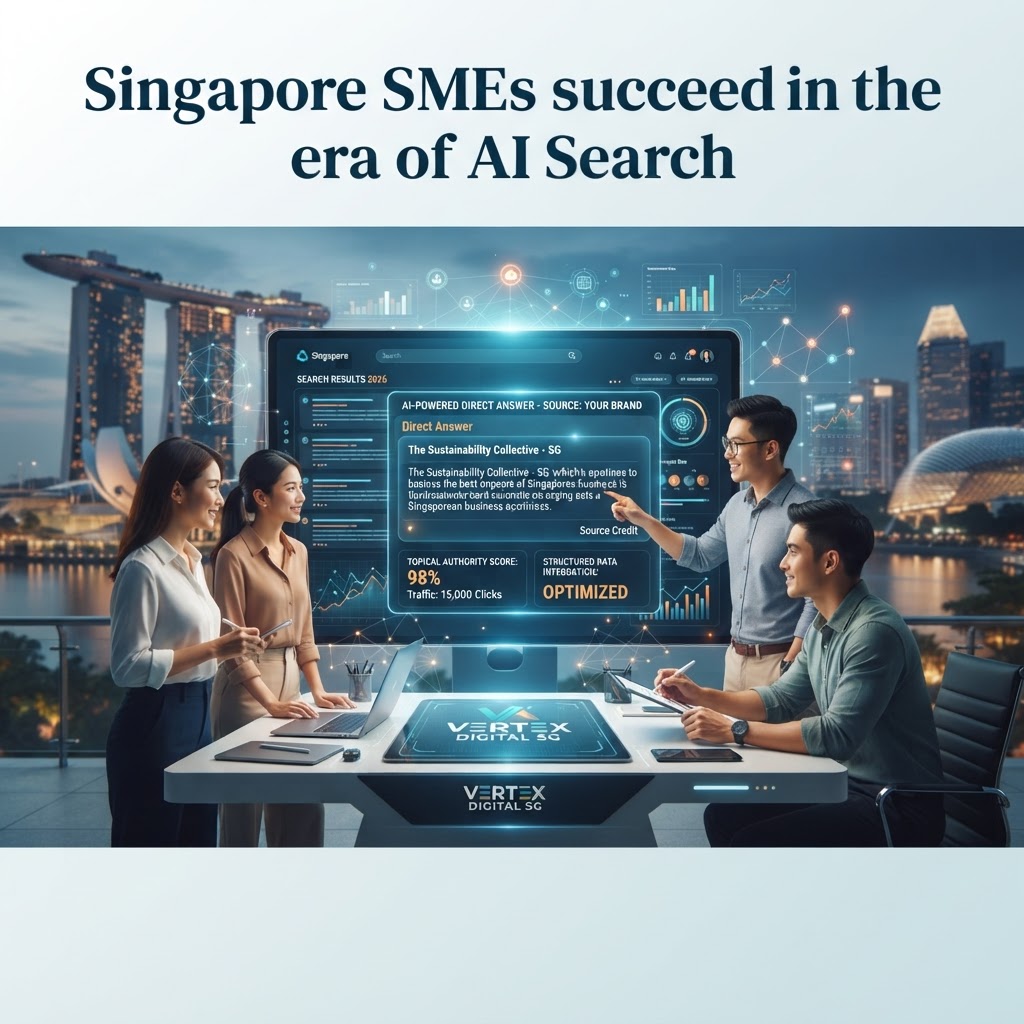
Why 2026 is a turning point for SEO in Singapore
Search in 2026 is no longer just about keywords and backlinks. Rapid advances in AI, generative models, and multimodal search are changing how users find answers — and how search engines rank pages. For Singapore businesses, where mobile-first usage, multilingual audiences, and dense local competition matter, adopting future-ready tactics is essential. This guide covers pragmatic, measurable SEO strategies a digital marketing agency singapore should implement to win in 2026.
Focus area 1 — Built-for-humans content with AI augmentation
High-quality, user-centered content remains the core ranking signal. But in 2026, content must satisfy both humans and AI evaluation layers that search engines use.
- Prioritize Experience, Expertise, Authoritativeness, and Trust (E-E-A-T). Use transparent author bios, data sources, citations, and regular content refreshes.
- Use AI to scale ideation and optimization, not blind generation. Generate outlines, topic clusters, and meta variants with AI, then have subject experts refine and fact-check output to avoid hallucinations.
- Build topical hubs and content clusters around core services (e.g., product pages, resources, local pages). This signals authority and improves internal linking relevance.
- Optimize for intent, not just queries. Map content to commercial, informational, and local intent. For local searches in Singapore, create pages that answer questions like pricing ranges, delivery zones, languages supported, and operating hours.
For practical web design and optimization tips that pair with content strategy, check this resource: top web design Singapore and SEO Singapore tips 2026.
Focus area 2 — Technical foundation and Core Web Vitals
Performance and technical hygiene are non-negotiable. Core Web Vitals remain a ranking and UX factor — particularly LCP (Largest Contentful Paint), CLS (Cumulative Layout Shift), and INP (Interaction to Next Paint).
- Prioritize fast hosting and CDN, optimized images (AVIF/WebP), and preloading above-the-fold resources.
- Adopt critical CSS, defer non-essential JS, and use server-side rendering or edge rendering where appropriate to speed up time-to-first-content.
- Implement structured data (schema.org) for products, local business, FAQs, events, and job postings to improve visibility in rich results.
- Audit crawlability: fix redirect chains, canonical tags, hreflang for multilingual sites, and ensure a clean XML sitemap and robots.txt.
A digital transformation primer with technical and grant-related guidance is available here: digital transformation Singapore SME AI PSG grant.
Focus area 3 — Local SEO: dominate maps and neighbourhood intent
Local signals are especially powerful in Singapore’s dense market. Local intent is often transactional and conversion-ready — optimise for it.
- Optimize and verify your Google Business Profile regularly. Use keyword-rich business descriptions, accurate categories, photos, and post timely updates.
- Build consistent NAP (Name, Address, Phone) citations across local directories and industry sites. Local backlink relevance pays off more than generic links.
- Create hyper-local pages: neighbourhood service pages, location-based FAQs, and schema markup for localBusiness.
- Encourage reviews ethically and respond promptly; reviews influence both rankings and click-throughs.
For a focused guide on generative search impact and SME optimisation, see: generative engine optimisation Singapore SME guide.
Focus area 4 — Semantic SEO, embeddings, and search beyond keywords
Search engines now use embeddings and semantic understanding extensively. Optimising for semantic relevance reduces reliance on exact-match keywords and improves visibility across related queries.
- Build content that answers clusters of related questions; use FAQs, comparison pages, and deep guides.
- Use internal linking to surface authority pages and create clear content hierarchies. Anchor text should be natural and contextual.
- Consider structured data for FAQ and Q&A, and implement topical silos to help search engines understand relationships between pages.
- For voice and zero-click queries, provide concise answer snippets and schema so your content can be used in assistant responses.
A combined approach of web design, SEO, and digital marketing helps form these silos effectively: web design Singapore SEO and digital marketing agency 2026.
Focus area 5 — Measurement, experimentation, and conversion optimization
Data-driven SEO wins. Being able to measure impact and run systematic experiments is critical.
- Migrate to and configure GA4 properly, set up conversion events, and connect Search Console for impressions, queries, and CTR insights.
- Use server-side tracking or consent-friendly first-party data strategies to adapt to privacy changes and cookie restrictions.
- Run regular A/B tests on title tags, meta descriptions, hero CTAs, and key landing pages. Track not only traffic but downstream conversions and LTV.
- Use intent-based KPIs: local pack appearances, branded vs non-branded conversions, click-to-call, driving directions clicks, and form completions.
For a playbook that integrates digital marketing tactics with measurable outcomes, review: digital marketing Singapore SME 2026 AI PSG.
Focus area 6 — Paid + organic synergy and channel orchestration
SEO should not exist in a silo. Cross-channel alignment accelerates growth and provides signals that amplify organic performance.
- Use paid search and Performance Max campaigns to gather query data for organic planning. High-converting paid keywords often indicate valuable organic targets.
- Coordinate content calendars across SEO, social, and email so messaging and landing pages are consistent; leverage short-form video for discovery and top-of-funnel signals.
- Retarget high-intent organic visitors with tailored ads to close conversion gaps.
For examples of integrated creative and technical work, check this portfolio-style resource: web design and SEO tips.
Focus area 7 — Automation, scaling, and governance
AI lets agencies scale core SEO tasks — but governance is essential.
- Build an editorial playbook that defines tone, structure, citation standards, image usage, semantic templates, and approval workflows.
- Automate repetitive tasks: meta tag generation, internal link suggestions, and content gap analysis — but always include human review to ensure accuracy and brand voice.
- Use prompt engineering templates for consistent AI outputs and keep a log of prompt versions and content edits to maintain compliance and quality assurance.
Tactical checklist for a digital marketing agency singapore in 2026
- Conduct a technical SEO audit focused on Core Web Vitals, mobile UX, and structured data.
- Map content to user intent and create 6–12 month topical cluster plans.
- Verify and optimize Google Business Profile and local citations for each location.
- Implement semantic internal linking and a scalable schema strategy.
- Use AI for ideation and drafts; always apply SME review and attribution.
- Track business KPIs: organic conversions, local pack clicks, revenue per channel, and churn.
- Maintain a privacy-first tracking plan and server-side measurement where needed.
If you want a compact checklist and examples tailored to Singapore SMEs, this resource outlines step-by-step projects: web design Singapore and SEO integration.
Final thoughts — prioritize outcomes over tactics
SEO in 2026 is a combination of technical excellence, human-centered content, and AI-powered efficiency. For Singapore businesses, the emphasis should be on local relevance, multilingual accessibility, fast experiences, and measurable business outcomes. A professional digital marketing agency singapore that blends tactical rigor with strategic experimentation will help brands not just chase rankings, but capture market share and sustainable growth.
For a targeted guide on applying generative and AI strategies for SMEs, see: generative engine optimisation Singapore SME guide.
This roadmap equips teams to prioritize the highest-impact initiatives and measure progress against real business goals in 2026 and beyond.