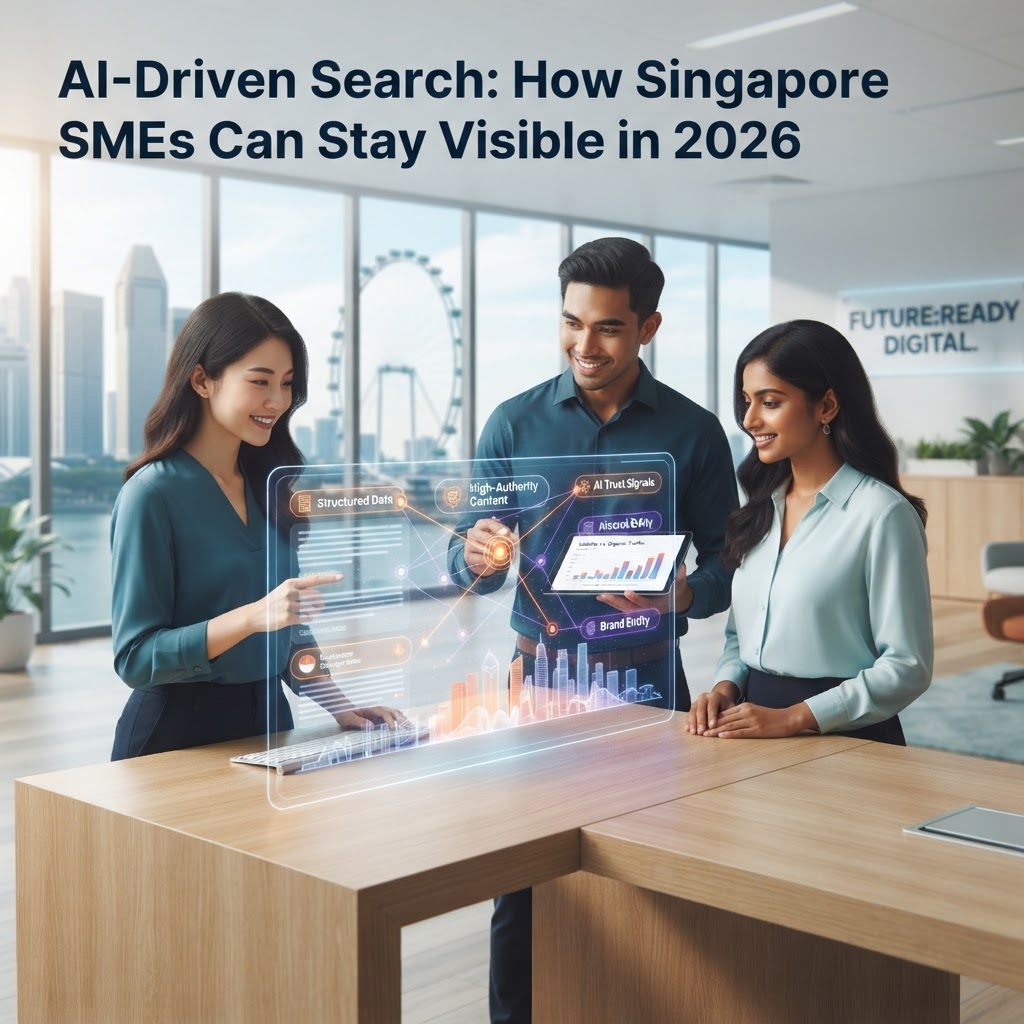
Generative Engine Optimization: A 2026 Guide for Singapore SMEs to Stay Visible
For years, Singapore business owners have focused their digital strategy on the traditional ten blue links found on search engine results pages. However, the digital landscape is undergoing a fundamental shift. As users increasingly turn to AI-powered platforms like ChatGPT, Gemini, and Google AI Overviews to answer complex queries, the way businesses attract traffic is changing. This shift necessitates a transition from traditional search engine optimization to Generative Engine Optimization. For local SMEs, remaining visible in this new era is no longer just about keyword density or backlink volume; it is about ensuring your brand is the trusted source of information that AI models cite. At iPro Dezign, our team helps companies navigate this evolution by focusing on high-quality content, technical performance, and structured data that AI models can easily parse. As you plan your digital strategy for 2026, understanding how to influence these generative responses is critical for maintaining a competitive edge. Whether you are seeking a digital audit or leveraging the Productivity Solutions Grant (PSG) to modernise your web infrastructure, our consultative approach ensures your brand stays relevant and reachable in an increasingly automated online marketplace.
Table of Contents
Understanding the Shift to Generative Engine Optimization
Generative Engine Optimization represents the next frontier in digital marketing, moving beyond the static nature of traditional ranking tactics. Instead of chasing simple keyword matches, this approach focuses on being integrated into the direct answers provided by AI search tools. When a potential customer asks an AI model about a specific industry service in Singapore, the model synthesises information from across the web to provide a conversational response. To be featured, a business must move beyond SEO basics and position itself as a credible, authoritative voice. This involves moving away from high-volume, thin-content strategies toward creating rich, contextually relevant information that answers user intent thoroughly. When our team assists clients, we emphasise that AI models weigh factual accuracy, depth, and neutrality heavily. If your website is slow, lacks structured data, or provides shallow information, these systems are likely to overlook you in favour of a more reliable source. Furthermore, the shift from click-based traffic to answer-based traffic means that user journeys are being shortened. A user who gets a precise answer inside a chat interface may never visit your site unless your brand is clearly identified as the primary authority. Therefore, being ‘citable’ is the new goal. By incorporating schema markup and providing clear, data-backed insights, SMEs can signal to AI models that their content is worth referencing. As we move through 2026, this will be the difference between remaining a visible brand and fading into the digital background. Developing this strategy requires a deep audit of current assets and a commitment to producing content that actually helps the reader solve their problems, which is exactly what modern AI search algorithms are trained to prioritise today.
Technical Foundations for AI-Readiness
Technical excellence is the bedrock upon which all visibility efforts rest, especially in an era of AI. Before an AI can cite your content, it must be able to crawl, index, and understand it efficiently. This is where Core Web Vitals—a set of metrics that measure how users experience the speed, responsiveness, and visual stability of a page—become even more critical. If a search engine crawler struggles to load your page due to heavy code or unoptimised images, the AI model may fail to capture the vital information needed to answer a user’s question. We strongly recommend that Singapore SMEs invest in a headless CMS or a modern, high-performance web structure that minimises bloat. When we rebuild client websites, we focus on reducing Largest Contentful Paint (LCP), which measures how fast the main content loads, and Cumulative Layout Shift (CLS), which tracks unexpected page movement. Beyond speed, structured data is a non-negotiable tool. By implementing Schema.org markup, you provide a clear roadmap for search engines to categorise your business, your services, and your geographical focus. Think of it as a set of tags that tells AI engines exactly what you offer. For a Singapore business, this includes tagging your address, operating hours, and local service areas. The following table highlights why specific technical factors matter for modern visibility:
| Technical Factor | Why It Matters for AI | Impact on Visibility |
|---|---|---|
| Page Load Speed | Faster crawling and indexing | Higher probability of being featured |
| Mobile Responsiveness | Dominant user search method in APAC | Ensures accessibility across all devices |
| Structured Data | Provides context for AI interpretation | Increased chance of being cited |
| Clean Code | Reduces errors for automated agents | Better crawl frequency and depth |
By keeping your technical infrastructure clean and modern, you ensure that you are always ready for the next iteration of search technology, providing a solid foundation for all other marketing efforts.
Building Topical Authority and Citability
To succeed in the age of generative search, your website must be built on the concept of topical authority. This means covering a subject so comprehensively that your site becomes the go-to resource for a specific set of topics. Instead of writing dozens of short, disjointed blog posts that compete with each other, our strategy focuses on creating ‘pillar content’ that serves as a definitive guide. By answering common client questions—such as ‘How do I choose an SEO agency?’ or ‘What are the benefits of the PSG grant?’—in a logical, interconnected way, you signal to AI algorithms that your domain is an expert. Citability is also a byproduct of original research and professional insight. AI models favour sources that provide unique data, case studies, or expert perspectives that cannot be found elsewhere. When you publish a report on SME trends in Singapore or share a case study regarding web performance improvements, you create a resource that is inherently valuable. This value is what drives other websites to link to your content and what encourages AI tools to reference your site as a source. We encourage our partners to avoid generic content mills and focus instead on human-led expertise. Because AI systems are becoming better at identifying ‘fluff,’ your content must provide genuine educational value to the reader. By blending technical SEO with deep, thoughtful content, you ensure your brand does not just show up in results but remains the preferred choice for those seeking reliable, authoritative answers in the Singapore market.
The Local Strategic Pivot for Singapore SMEs
For businesses in Singapore, the ability to tailor your digital strategy to the local context remains a significant advantage. While AI models operate globally, they are increasingly capable of understanding local nuances, such as regional service capabilities and local government support schemes. When you integrate information about Singapore-specific opportunities—such as the PSG grant, which allows SMEs to fund up to 50% of eligible digital solutions—into your content, you are serving a highly specific audience that AI models want to connect with. Our role at iPro Dezign is to help you frame your business as a pillar of the local digital economy. This means prioritising PDPA-compliant data practices, ensuring your service descriptions are accurate for the Singapore market, and maintaining a tone that resonates with our local business culture. The shift toward generative search does not remove the need for human relationships; rather, it makes them more important. When an AI points a potential customer to your business, the landing page they arrive on must be professional, trustworthy, and capable of converting that traffic. If a prospective client arrives via a generative answer, they are often further along in their decision-making process, meaning your site needs to be ready to address their specific needs immediately. We believe that by combining a modern, performance-first web presence with clear, authoritative communication, Singapore SMEs can thrive in this new landscape. We offer consultative support to ensure your business is not just visible, but is positioned to leverage the full potential of your digital assets through a growth-oriented partnership that focuses on long-term, measurable success in our unique market environment.
Conclusion
Adapting to the rise of generative search is a strategic imperative for every Singapore SME in 2026. While the technology behind these tools continues to evolve, the core requirements for visibility remain rooted in technical excellence, topical authority, and a deep understanding of your audience. By focusing on building a fast, accessible, and information-rich website, you position your brand to be the reliable source that users—and AI models—naturally prefer. We invite you to explore how your current digital infrastructure measures up against these standards. Whether you are interested in a comprehensive technical audit, need guidance on navigating PSG-funded projects, or want to develop a long-term content roadmap, our team is ready to help. Reach out to us today to book a consultation. Let us partner with you to build a resilient, visible, and high-performing digital presence that secures your growth for years to come.
Frequently Asked Questions
What is the main difference between traditional SEO and Generative Engine Optimization? Traditional SEO focuses on earning clicks from a list of blue links, whereas Generative Engine Optimization focuses on being cited as a reliable source within the conversational answer provided by an AI model.
How can I make my website more ‘citable’ for AI tools? Focus on publishing high-quality, original data and expert content while using structured data (Schema markup) to help AI models interpret the context of your services.
Do I still need to worry about traditional rankings? Yes. Traditional SEO and Generative Engine Optimization are not mutually exclusive; a strong foundation in one supports the other, and users still rely on traditional search for many types of queries.
Can SMEs in Singapore leverage grants for this work? Yes. Many web performance and digital transformation projects are eligible for the Productivity Solutions Grant (PSG), which can help fund up to 50% of the cost of upgrades.
Is AI going to replace the need for a website? No. AI models direct traffic and synthesize information, but the final conversion, service delivery, and trust-building process still happen on your proprietary website.